Start with what you actually cook.
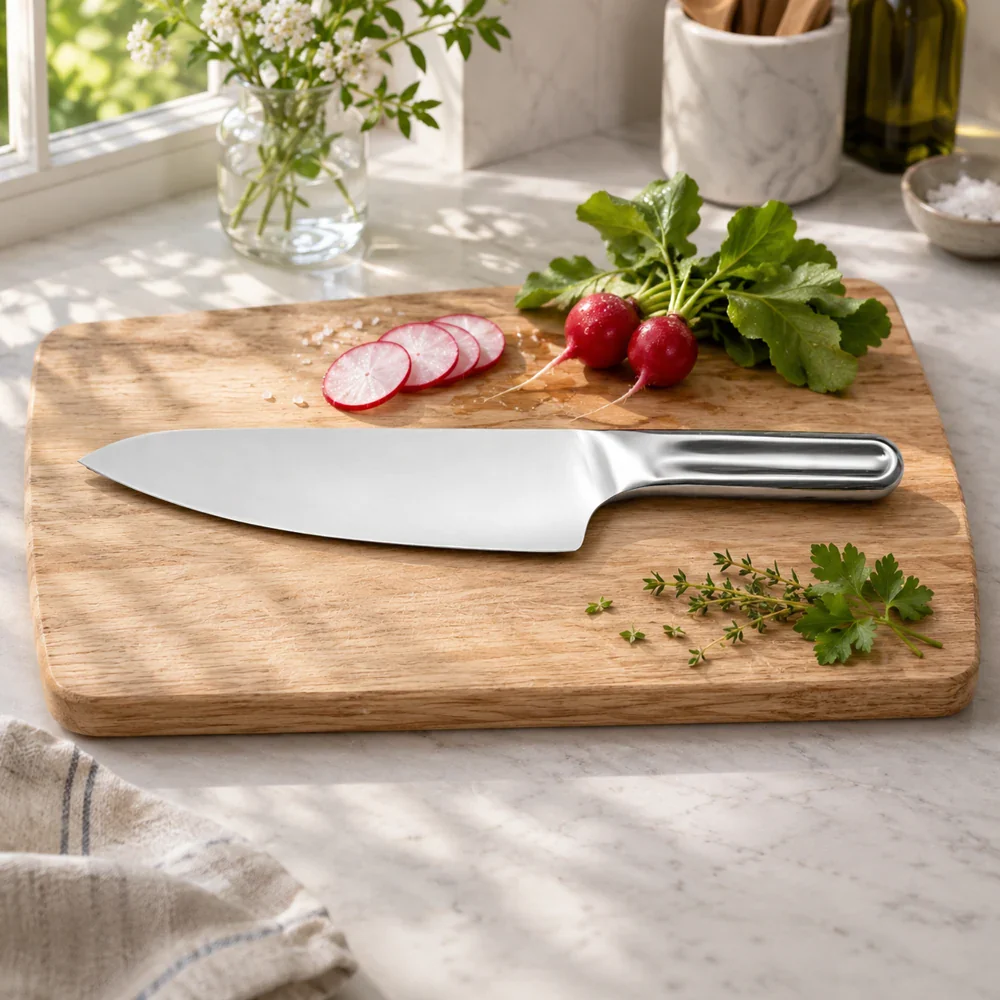
Think about the preparation you repeat most often: slicing vegetables, chopping herbs or portioning boneless ingredients. A chef’s knife offers a useful all-round profile, while a smaller utility knife can feel more manageable for compact tasks. Choose the shape around your routine rather than the number of tools in a set. Check the actual blade dimensions on the product page; photographs alone can make a compact knife look larger than it is.

Look at the whole knife.
Blade shape is only part of the choice. Handle length, grip shape and the transition between blade and handle all affect how the knife feels. A curved edge supports a different cutting motion from a straighter profile. Look at the clean product view to understand the shape, then use the kitchen scene for context. If you can try a sample, check whether your grip feels natural and your hand has comfortable clearance above the board.

Build a useful starting selection.
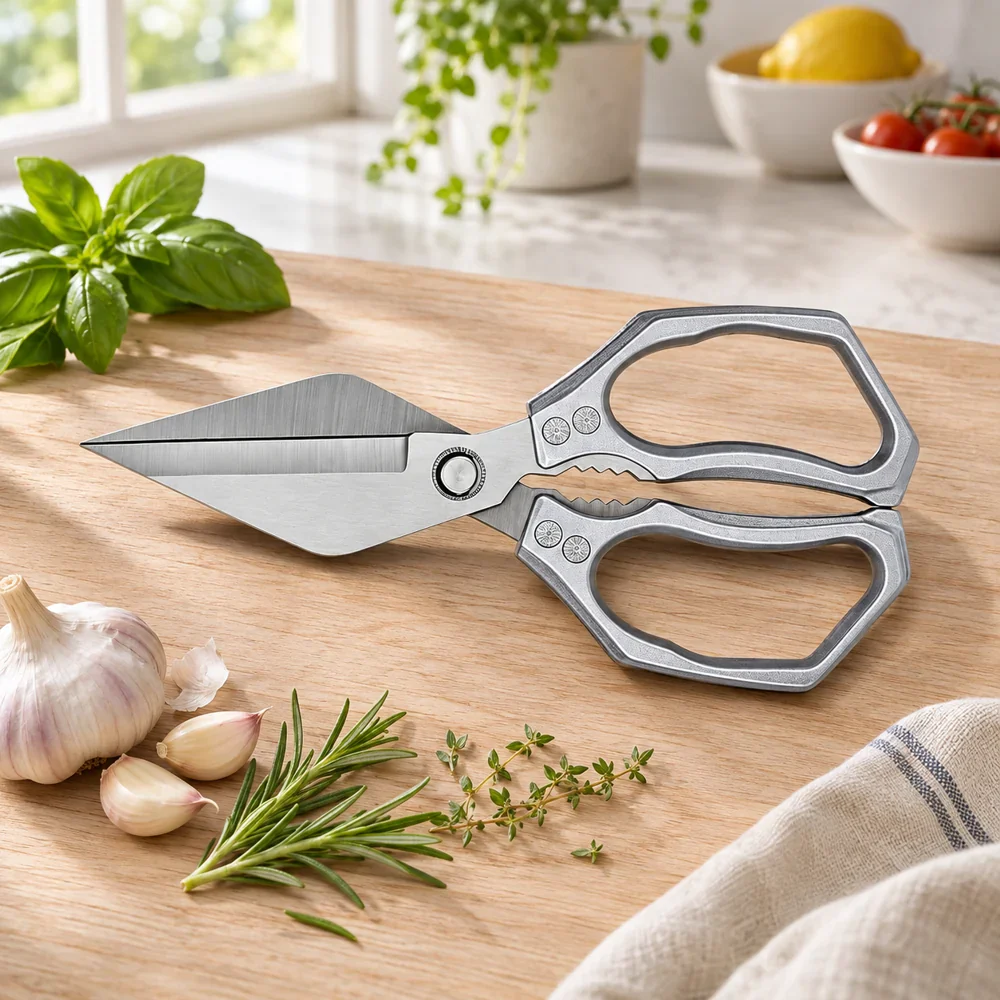
Begin with the knife that covers your main preparation, then add tools for distinct jobs. A serrated blade helps with crusty bread; a small knife suits trimming and peeling. Kitchen shears handle tasks that do not call for a cutting board. Choose a suitable wooden or plastic cutting surface, keep the work area stable and store the edge safely. The most useful collection is one in which every piece has a clear role.