

Wash carefully, then dry.
Follow the care instructions supplied with the individual product. For kitchen knives, gentle hand washing with mild detergent and prompt drying are useful everyday habits. Handle the blade carefully and keep the edge facing safely away. Avoid leaving knives soaking or hidden beneath washing-up water. Wipe the handle and the area where it meets the blade as well, and check the product guidance before using a dishwasher or an abrasive cleaner.
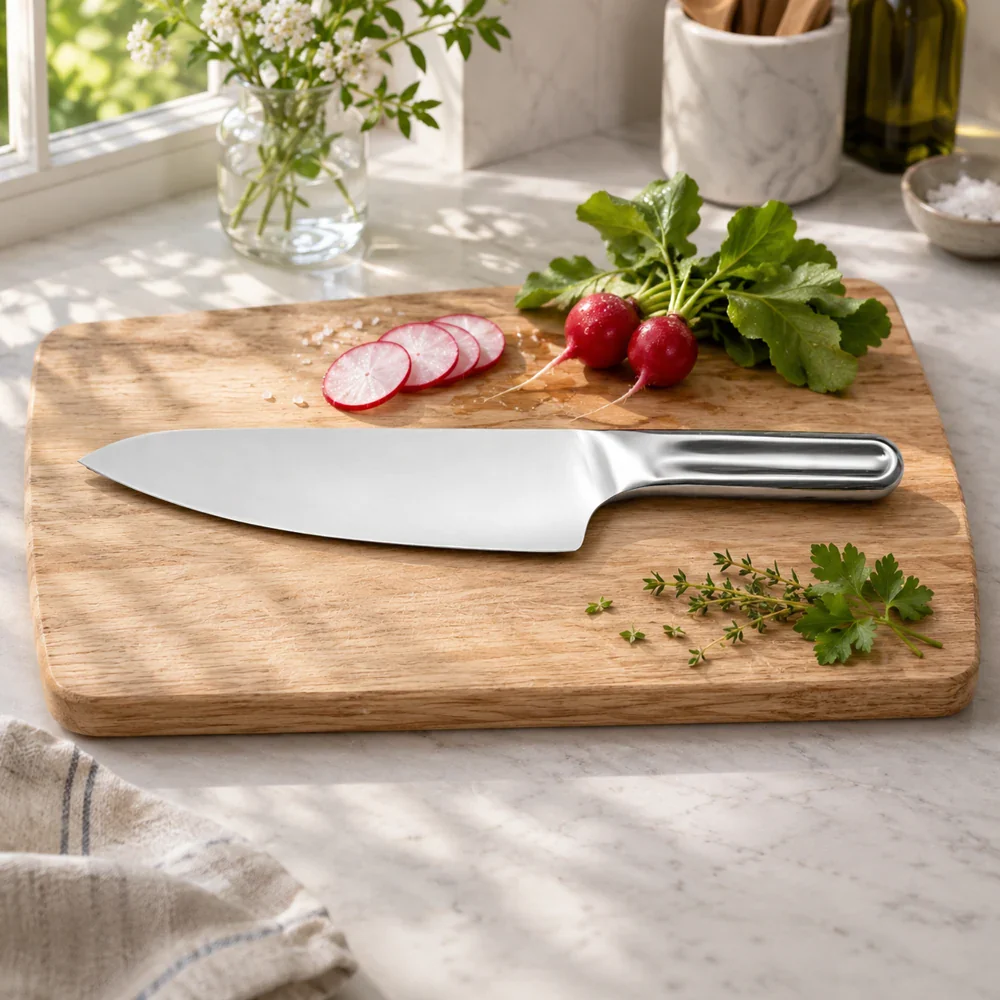
Choose the surface beneath the edge.
A suitable wooden or plastic cutting board provides a practical preparation surface. Glass, stone and metal surfaces can be hard on an edge. Keep the board stable, and choose a knife suited to the task rather than using a general kitchen blade to pry, twist or cut frozen food. To move chopped ingredients, use a bench scraper instead of dragging the cutting edge sideways across the board.

Store safely and check the guidance.
A suitable sheath, holder or organised drawer keeps sharp edges separate and easier to find. Put knives away dry and clean storage components according to their instructions. Edge maintenance depends on the knife and its sharpening guidance; honing and sharpening are different tasks. If you are unsure which method or accessory is suitable, check the product instructions before starting. A small, consistent care routine is easier to maintain than an occasional rescue.
